
 Uncategorized
Packaging Coffee and Protein. Lessons from Our Customers
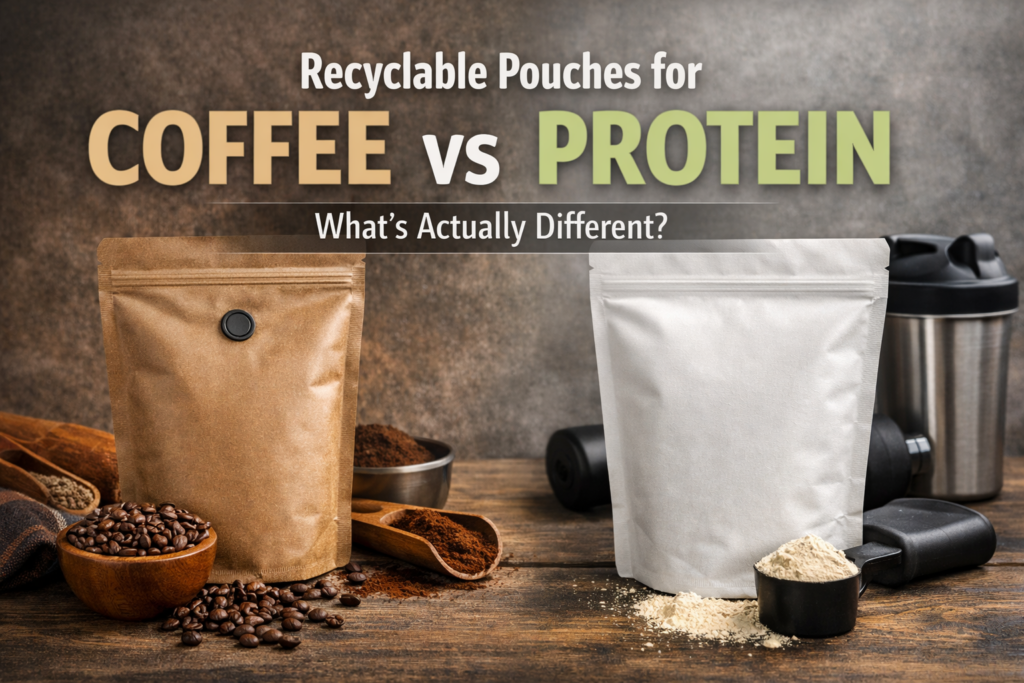
In PackTailor we work with customers from many different industries. Over time two sectors have stood out clearly. Coffee and sports supplements. Both launch products frequently and both rely heavily on custom pouches.
Because we work with these two categories side by side every day we would be happy to share what we have learned about those supplements and coffee industry packaging over the years.
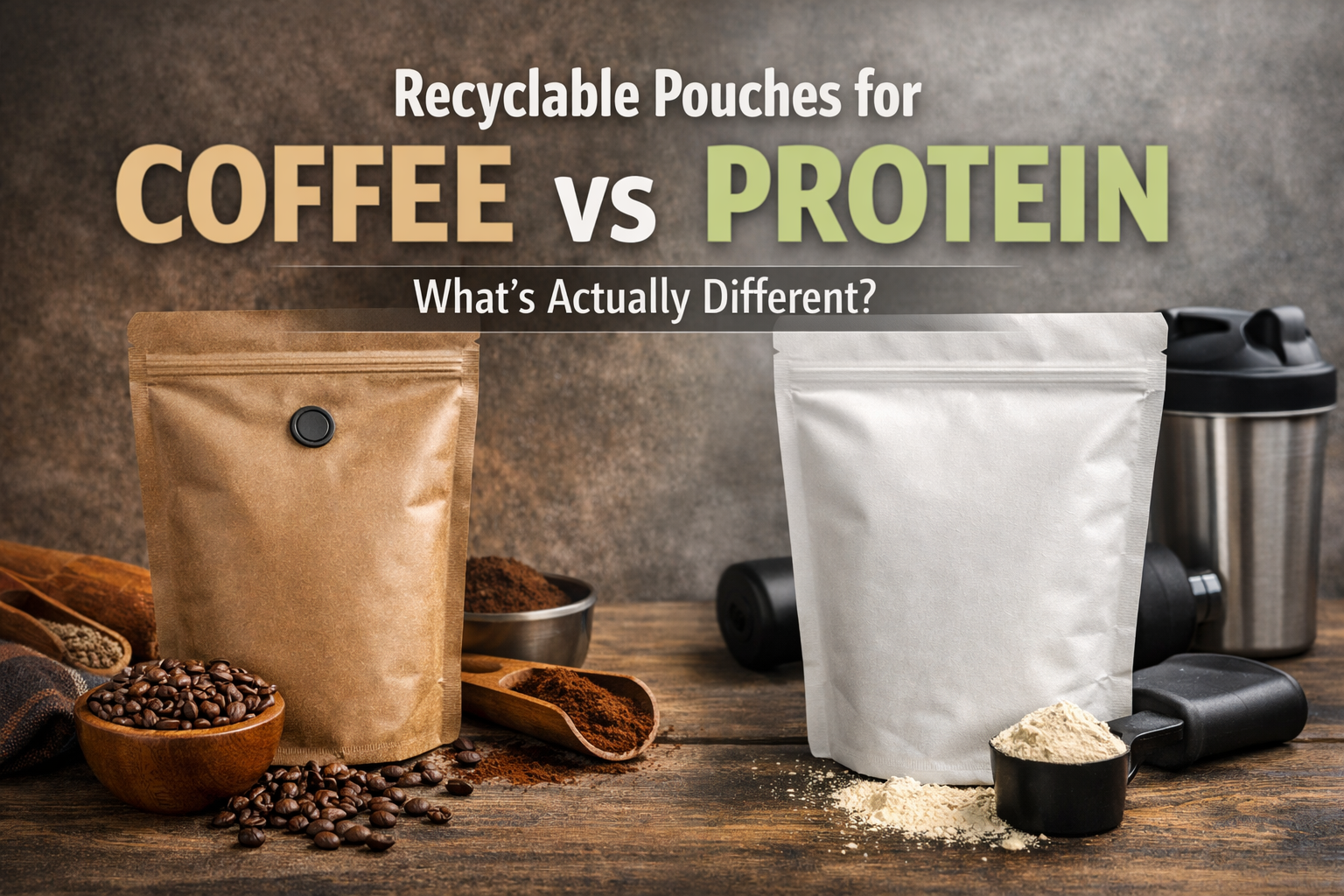
At first glance recyclable coffee pouches and protein powder pouches look almost identical. In reality they solve different technical problems. If we would treat the same it would lead to freshness issues usability problems or unnecessary cost.
Same recyclable materials. Different needs.
Both coffee and protein packaging typically use mono material PE or PP pouches. This allows the packaging to stay recyclable within existing EU recycling systems. The key difference is what the product inside needs protection from.
Coffee is sensitive to oxygen and aroma loss.
Protein powder is sensitive to moisture and frequent opening.That one difference drives most packaging decisions.
Degassing valves. Required for coffee. Not needed for protein.
Freshly roasted coffee releases gas after packing. Without a one way degassing valve the pouch can inflate lose seal integrity or go stale faster. For coffee a valve is not optional. It is a functional requirement. Protein powders do not release gas. Adding a valve brings no benefit and only increases cost. The rule is simple.
Coffee needs a valve. Protein does not.
Shelf life tolerance
Coffee quality drops fast if packaging performance is poor. Oxygen exposure affects taste and aroma very quickly. Protein powder is more stable. As long as moisture is controlled and the zipper performs well shelf life is predictable. This is why coffee packaging leaves less room for error.
EU labeling and compliance
Coffee bags are relatively straightforward. Product name, net weight, origin and best before date. Protein and supplements packaging is more complex. Ingredient lists nutrition tables allergen statements and careful wording are required.This affects pouch size layout and print setup. Not recyclability itself but execution risk.
Format preferences
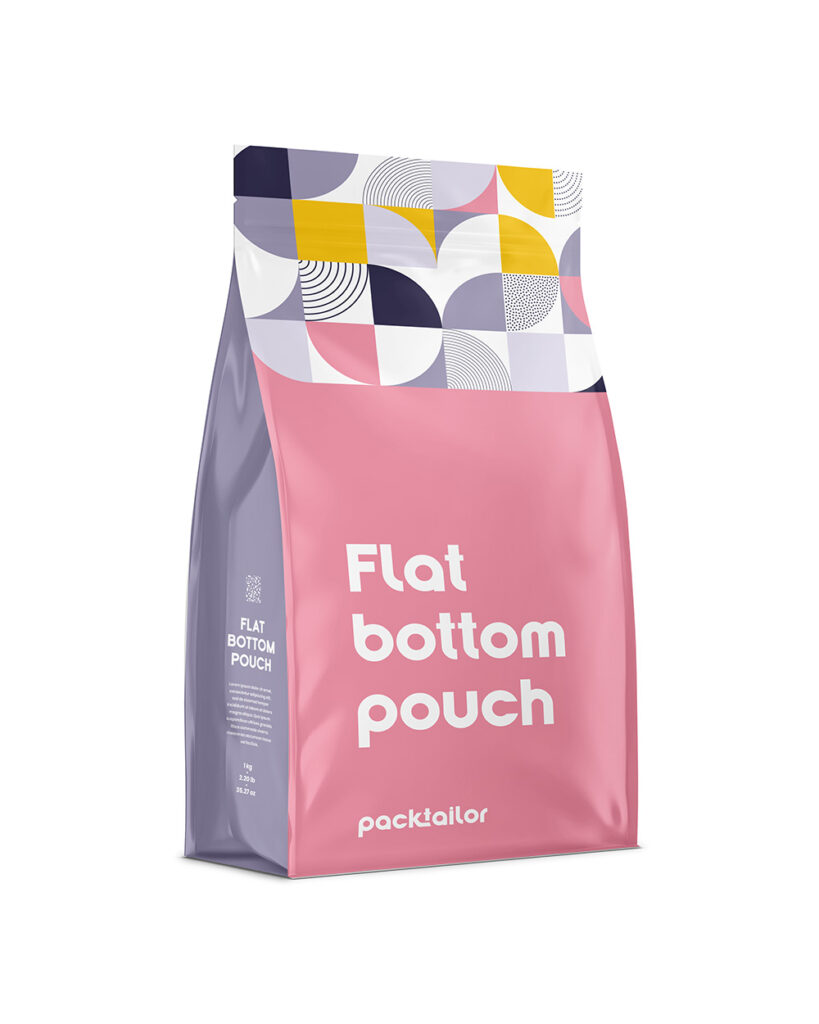
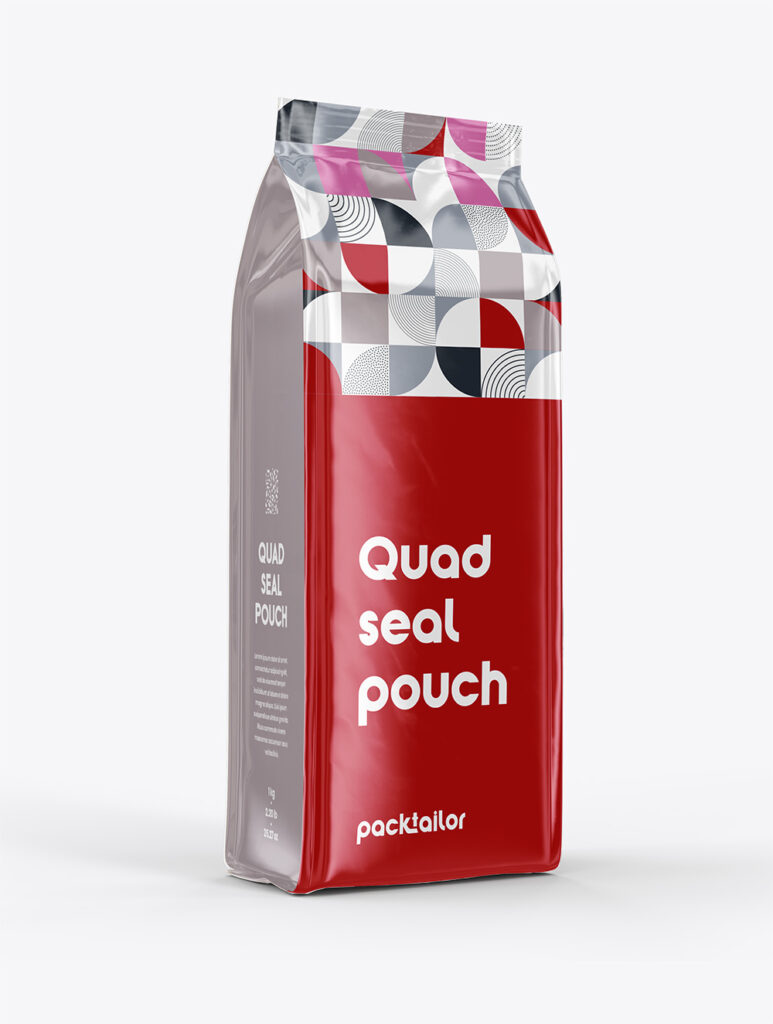
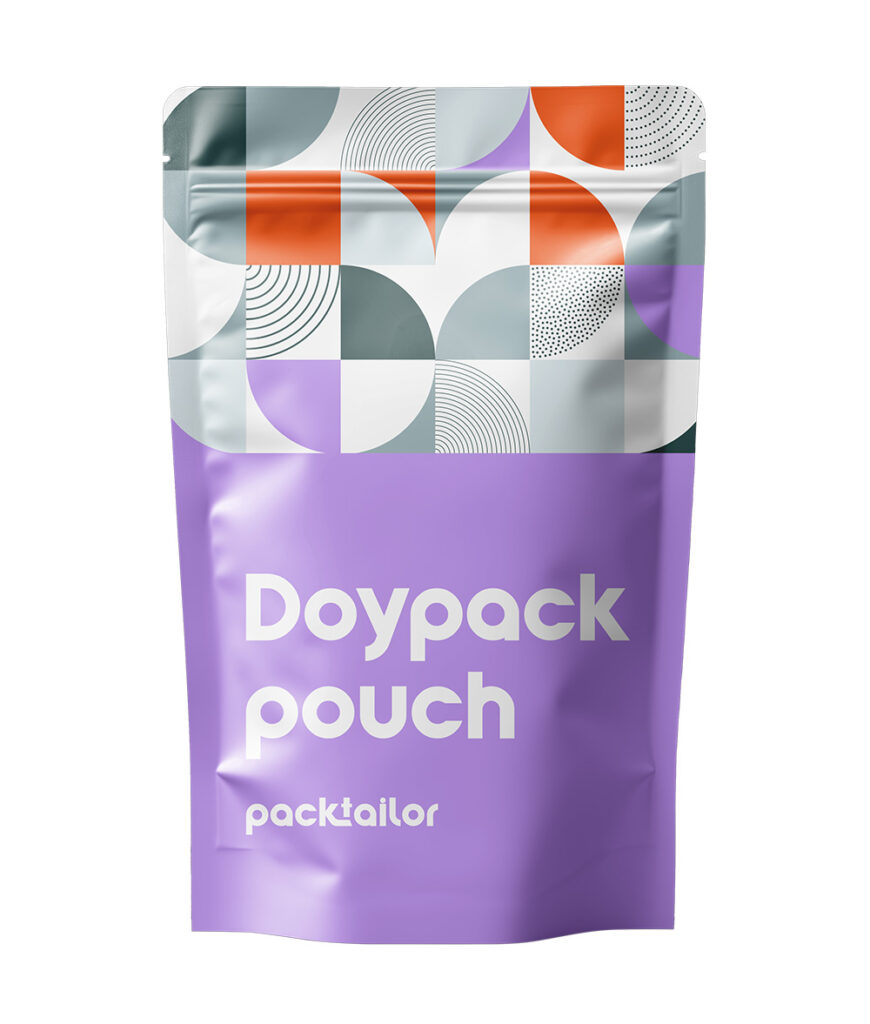
Coffee brands often choose flat bottom pouches, doypacks with valves or side gusset formats.Protein brands usually prefer larger doypacks, wide openings for scoops and strong zippers for daily use.The materials may be the same but user behaviour is different.
Recyclable vs compostable. What works in practice.
Compostable packaging sounds attractive. In practice recyclable mono material pouches perform better in real EU waste systems and protect product quality more reliably.For both coffee and protein reducing product waste matters more than material claims.
In conclusion
Coffee and protein pouches may look similar but they should not be treated the same.The right recyclable solution depends on gas release moisture sensitivity shelf life expectations and regulatory exposure.Brands that understand these differences avoid quality issues stay compliant and meet sustainability goals without compromising performance.
You must be logged in to post a comment.