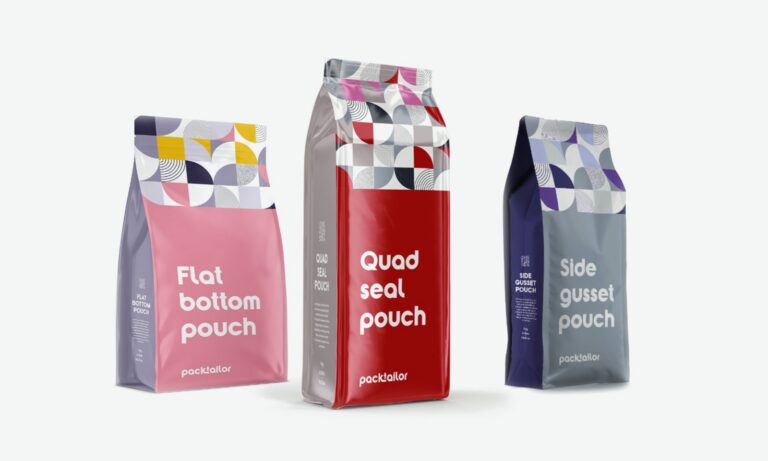
Recyclable Pouches and PPWR: What the New EU Packaging Rules Mean for Your Brand
The EU has new rules for packaging. The Packaging and Packaging Waste Regulation, usually called PPWR, started to apply on 12 August 2026. It affects almost every product sold in the EU, including coffee, supplements, snacks and pet food packed in flexible pouches.
Many small and medium brands are now asking the same questions. What has changed? What do I need to do now? And will my current pouches still be allowed in a few years? This article explains the main points in plain language.
What is PPWR?
PPWR is Regulation (EU) 2025/40. It replaces the old EU Packaging Directive. Because it is a regulation and not a directive, the same rules apply directly in every EU country. The main goals are to reduce packaging waste, make all packaging recyclable and increase the use of recycled materials.
What applies from 12 August 2026
The first set of rules is already in force. The most important ones for food and supplement packaging are:
Limits on PFAS in food contact packaging.
PFAS are so called forever chemicals. Packaging that touches food must stay under strict limits.
Limits on heavy metals.
Lead, cadmium, mercury and hexavalent chromium together must stay below 100 mg/kg in packaging.
Proof of conformity.
Packaging placed on the EU market needs technical documentation and an EU declaration of conformity that shows it meets the rules.
For most brands, the practical step is simple: ask your packaging supplier for the right documents. At PackTailor, we can provide the documentation you need for the pouches we supply.
The key dates after 2026
| Date | What changes |
|---|---|
| 12 Aug 2026 | PPWR starts to apply. Rules on substances such as PFAS, and conformity documents. |
| 12 Aug 2028 | Harmonised EU labels showing what the packaging is made of, to help consumers sort waste. |
| 1 Jan 2030 | All packaging must be recyclable by design. Minimum recycled content for plastic packaging. Packaging must be kept to the minimum size and weight needed. |
| 1 Jan 2035 | Packaging must not only be designed for recycling, but also recycled at scale in practice. |
| 1 Jan 2038 | Only the best recyclability grades (A and B) are allowed. |
| 1 Jan 2040 | Higher recycled content targets for plastic packaging. |
What 2030 means for flexible pouches
The biggest change for pouches comes in 2030. From then on, packaging must be designed for recycling. Each type of packaging will get a recyclability grade from A to E. Grades D and E will no longer be allowed. From 2038, grade C will also be phased out.
This matters a lot for flexible packaging. Many traditional pouches are made from several different materials bonded together, for example PET, aluminium and PE. These give very good protection, but they are hard to recycle because the layers cannot be separated.
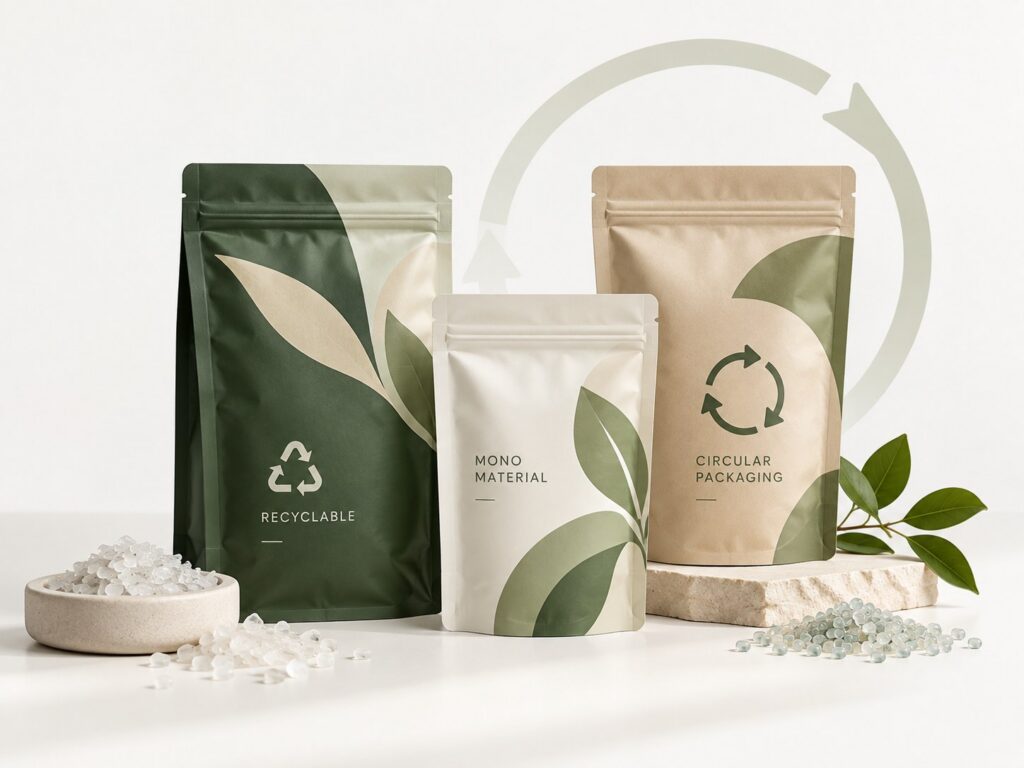
Mono-material pouches are different. They are made from one plastic family, such as PE or PP, which makes sorting and recycling much more realistic. This is why mono-material packaging is expected to become much more common before 2030.
Recycled content
From 2030, plastic packaging must also contain a minimum share of recycled plastic. For contact-sensitive packaging that is not made from PET, such as many food pouches, the minimum is 10% in 2030 and 25% in 2040. For other plastic packaging it is 35% in 2030 and 65% in 2040. There are some exceptions, and the details will be set out in further EU rules.
Less empty space
PPWR also limits empty space. From 2030, grouped, transport and e-commerce packaging can have a maximum of 50% empty space. Packaging in general must be kept to the minimum weight and volume needed to do its job. Choosing the right pouch size now is a good habit for the future.
Can every product use recyclable pouches?
Not always. Barrier and shelf life still matter. Some products, such as freshly roasted coffee or products that need a very long shelf life, need strong protection against oxygen, moisture and light.
For many dry products, such as coffee, tea, snacks, supplements and pet food, recyclable mono-material pouches often work very well. Barrier layers such as EVOH may be used where needed. Our approach is practical: if a recyclable solution protects your product well enough, we recommend it. If not, we tell you honestly. You can read more about our options in the materials and printing guide.
What should brands do now?
Ask for documents.
Make sure your supplier can provide a declaration of conformity for your packaging.
Review your current pouches.
Find out which of your packs are multi-material and may not meet the 2030 recyclability rules.
Test mono-material options.
Place a small sample order of recyclable mono-material PE pouches and test them with your product.
Check your pouch sizes.
Avoid oversized packs with a lot of empty space.
Plan your artwork.
When the harmonised EU labels arrive, you will need to update your designs. Digital printing makes artwork updates easy and affordable.
How PackTailor can help
We offer recyclable mono-material PE pouches whenever the barrier and shelf life suit the product. Tell us what you are packing, and we will recommend the right material. With digital printing you can start from around 500 pieces, so a small test order is easy to place.
See how this works for supplement packaging and pet food packaging, or read about the benefits of refill pouches.
Please note: this article gives a general overview and is not legal advice. For questions about your specific product, check with the relevant authority or a compliance specialist.
Frequently asked questions
When does PPWR start to apply?
PPWR started to apply on 12 August 2026. Some requirements, such as recyclability and recycled content, apply later, mostly from 2030.
Will multi-layer pouches be banned?
Not directly. But from 2030 all packaging must meet recyclability grades, and many mixed-material pouches that cannot be recycled will not meet them.
Are mono-material pouches recyclable?
Mono-material PE and PP pouches are designed for improved recyclability and can be recycled where suitable collection and recycling streams exist.
Are refill pouches recyclable?
Refill pouches made from mono-material PE or PP are designed for recycling. Refill pouches made from mixed materials are much harder to recycle.
Does PPWR apply to small businesses?
Yes. PPWR applies to packaging placed on the EU market, whatever the size of the company. Some obligations work differently for micro-enterprises.